Choosing the right logo printing method is an important part of custom jewelry packaging. The same logo can create a completely different impression depending on the packaging material, surface texture, color and finishing process. For jewelry brands and retailers, the goal is not simply to put a logo on a box, but to select a process that fits the brand style and produces a consistent result in mass production.
At FUYI PACKING, we support different logo and surface finishing methods across our wholesale jewelry packaging range, including jewelry boxes, jewelry pouches, paper bags and other packaging products. Common options include hot foil stamping, embossing, debossing, screen printing, UV printing and custom labels. Each process has different advantages, so the best choice depends on the design, packaging material, order quantity and desired visual effect.
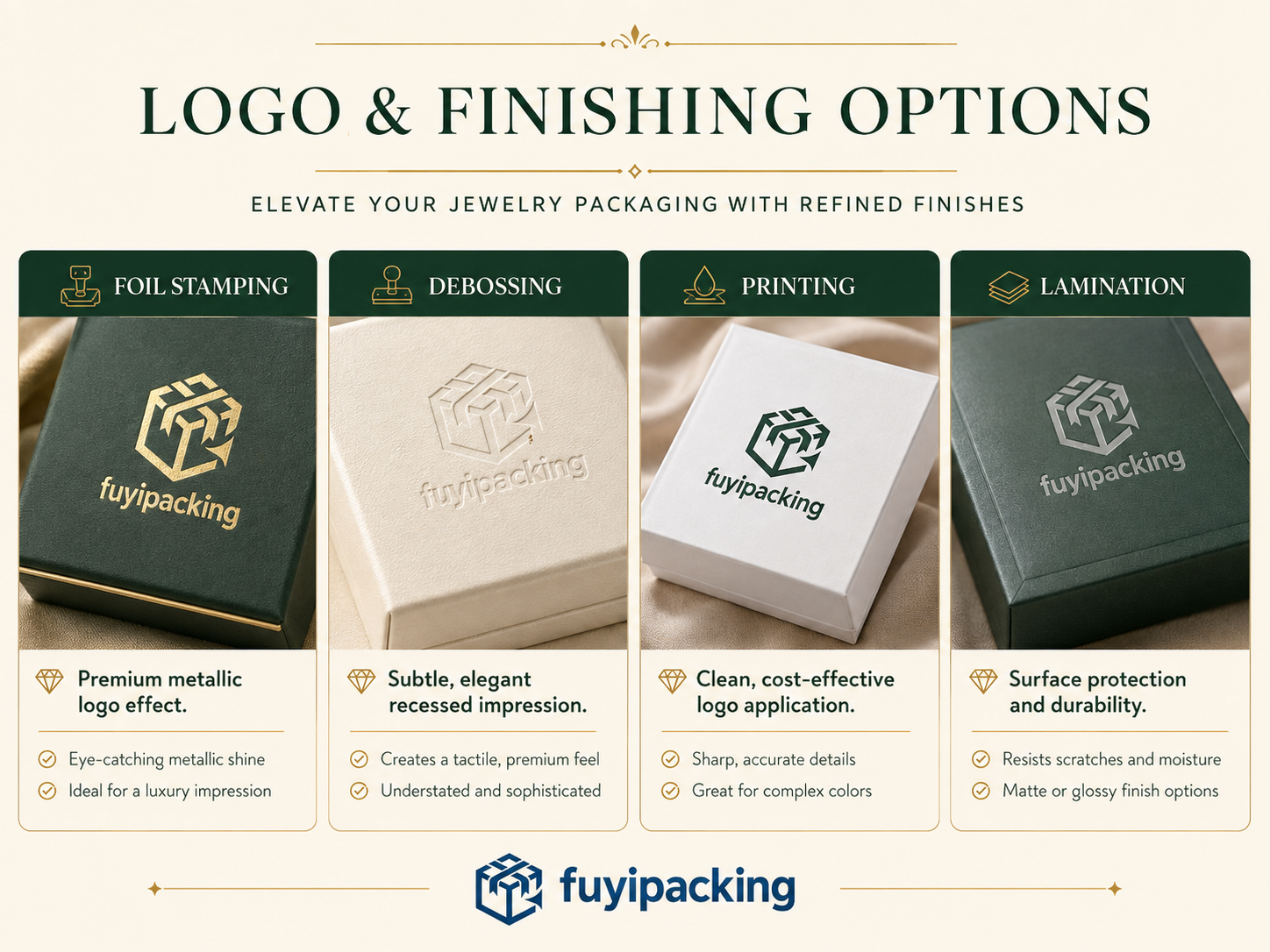
1. Hot Foil Stamping for Premium Jewelry Packaging
Hot foil stamping is one of the most widely used logo finishing methods for custom jewelry packaging. The process uses heat and pressure to transfer foil onto the packaging surface, creating a clean metallic or solid-color logo. Gold foil is especially popular for luxury jewelry boxes because it creates an elegant appearance without making the design overly complicated.
Silver, rose gold, black and other foil colors can also be selected according to the box color and overall brand identity. Foil stamping is commonly used on jewelry boxes , paper gift bags and selected leather jewelry boxes . On textured papers or specialty materials, the final effect may vary, so sampling is recommended before bulk production.
2. Embossing and Debossing for Subtle Branding
Embossing and debossing are suitable for brands that prefer a more understated logo effect. Embossing raises the design above the packaging surface, while debossing presses the logo into the material. Both methods create a three-dimensional effect that can make simple logos, initials and brand names look more refined.
These processes work particularly well on rigid boxes, selected papers and PU leather surfaces. They can also be combined with foil stamping when a brand wants both metallic color and additional depth. Because the result depends on material thickness and surface texture, very thin lines and small lettering should be tested carefully.
3. Screen Printing for Clean, Solid-Color Logos
Screen printing is a practical option for simple logos and strong solid colors. Ink is transferred directly onto the packaging surface through a prepared screen, making this method suitable for a variety of packaging materials.
For jewelry packaging, screen printing is often used on jewelry pouches , paper bags, selected PU materials and other surfaces where direct ink printing works well. Black, white and other single-color logos are particularly suitable because they provide clear contrast while keeping the overall packaging design simple.
4. UV Printing for Detailed Designs
UV printing provides greater flexibility when a logo or graphic contains more detail than traditional foil or single-color printing can reproduce. UV ink is cured quickly during printing, allowing logos, text and selected graphic elements to be applied with clear detail.
This method can be useful for jewelry brands with more complex artwork or specific visual requirements. However, the final result still depends on the packaging surface. Smooth rigid materials generally provide more predictable results than highly textured or soft surfaces, so material compatibility should be confirmed before mass production.
5. Custom Stickers and Labels for Flexible Packaging
Custom stickers and labels are useful when brands need a flexible branding solution without printing directly on every packaging component. They can be applied to tissue paper, shipping boxes, envelopes, gift bags and other packaging accessories .
This option can be especially useful for seasonal collections, product launches and smaller orders. Although a sticker creates a different effect from foil stamping or embossing, carefully selected material, color and placement can still create a professional and consistent packaging presentation.
Which Logo Printing Method Should You Choose?
There is no single printing method that is suitable for every jewelry packaging project. The correct choice should consider both visual requirements and production feasibility. A process that works well on smooth paperboard may create a different result on velvet, microfiber or PU leather.
Hot Foil Stamping
Best for premium metallic logos on jewelry boxes and paper bags.
Embossing / Debossing
Best for subtle, three-dimensional and minimalist branding.
Screen Printing
Best for simple logos, solid colors and selected pouch materials.
UV Printing
Best for more detailed logos, text and graphic elements.
| Logo Method | Typical Effect | Common Applications |
|---|---|---|
| Hot Foil Stamping | Metallic, elegant and highly visible | Rigid jewelry boxes, paper bags, selected PU surfaces |
| Embossing / Debossing | Subtle three-dimensional effect | Rigid boxes, specialty paper and PU packaging |
| Screen Printing | Clean and solid-color appearance | Jewelry pouches, paper bags and selected packaging surfaces |
| UV Printing | Sharp and flexible graphic reproduction | Detailed logos and graphic elements on compatible surfaces |
| Stickers / Labels | Flexible and easy to apply | Tissue paper, envelopes, bags and shipping packaging |
Test the Logo Effect Before Mass Production
A digital mockup is useful for checking the overall layout, but it cannot fully reproduce the actual effect of metallic foil, ink, embossing depth or material texture. For this reason, a physical sample is recommended when the logo finish is an important part of the final packaging appearance.
Before bulk production, brands should confirm logo size, position, color and finishing quality. This is particularly important for small text, thin lines, textured surfaces and metallic finishes. Sampling helps reduce misunderstandings and provides a clear production reference for both the buyer and manufacturer.
Conclusion
The best logo printing method for custom jewelry packaging depends on your packaging material, logo design, brand positioning and production requirements. Hot foil stamping is ideal for premium metallic effects, while embossing and debossing create subtle depth. Screen printing works well for simple solid-color logos, and UV printing provides greater flexibility for more detailed designs.
Instead of selecting a printing method based only on appearance, jewelry brands should also consider material compatibility, order quantity and repeat-production consistency. Choosing the right combination of packaging material and logo process can create a more professional brand presentation and help maintain consistent packaging quality across future orders. For additional budgeting guidance, see our Custom Jewelry Packaging Cost Guide .
Frequently Asked Questions
Which logo method is best for luxury jewelry boxes?
Can gold foil be applied to different jewelry box materials?
Is screen printing suitable for jewelry pouches?
Should I provide a vector logo file?
Find the Right Logo Finish for Your Jewelry Packaging
Send FUYI PACKING your logo, packaging style, required quantity and preferred finish. Our team can recommend a suitable logo process according to the packaging material and production requirements.
Request a Packaging Quote →