FUYI PACKING

velvet vs microfiber vs leather jewelry pouches

Velvet vs Microfiber vs Leather Jewelry Pouches: Which Is Best for Your Brand?

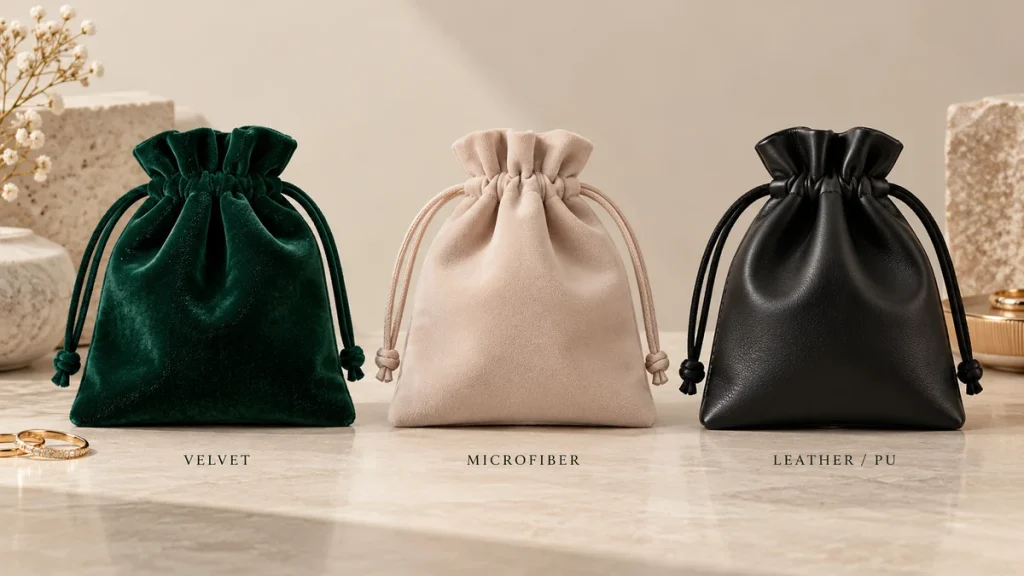
Choosing a jewelry pouch is not only about selecting a color. The material affects how the packaging feels, how well it protects the jewelry, how the logo appears and how customers perceive the brand. Velvet, microfiber and leather-style jewelry pouches are all widely used, but each material is better suited to different products, price points and brand positioning. This guide compares the three options to help jewelry brands and retailers choose more confidently. Why Jewelry Pouch Material Matters A jewelry pouch is often one of the first packaging components customers touch. Its texture, structure and finish can immediately influence whether the packaging feels traditional, modern, practical or premium. Material choice also affects production. Some materials are better suited to hot stamping, while others work well with printed, embossed or debossed logos. Durability, lint, flexibility and unit cost can also vary significantly. For brands buying several pouch styles, understanding these differences can make it easier to create consistent packaging across rings, earrings, necklaces, bracelets and other jewelry products. Velvet Jewelry Pouches Velvet jewelry pouches have a soft surface and a traditional premium appearance. They are commonly used for rings, earrings, necklaces, bracelets and gift packaging, especially when the brand wants a warmer or more luxurious presentation. Velvet works particularly well with simple metallic logos such as gold or silver hot stamping. Dark green, black, navy, burgundy and neutral colors can create a strong gift-oriented look without requiring a complex pouch structure. The main consideration is surface texture. Traditional velvet may attract more lint than smoother materials, so brands should consider how the pouch will be stored, handled and presented before choosing it. Explore our Wholesale Velvet Jewelry Pouches . Microfiber Jewelry Pouches Microfiber jewelry pouches have a smoother and cleaner appearance than traditional velvet. The material is soft enough for jewelry packaging while maintaining a more modern visual style. Microfiber is especially useful for fine jewelry, silver jewelry and brands that prefer minimalist packaging. It can work with custom colors and several logo techniques while maintaining a relatively refined surface. For many jewelry brands, microfiber provides a useful balance between premium presentation, production flexibility and cost. It is therefore suitable for both everyday jewelry collections and higher-value product lines. View our Custom Microfiber Jewelry Pouches . Leather Jewelry Pouches Leather and PU leather jewelry pouches normally have more structure than velvet or microfiber. They can create a stronger premium impression and are often chosen for watches, rings, bracelets and higher-value jewelry. Their smoother surface also makes them suitable for branding techniques such as embossing, debossing and printed logos. This can be useful for brands that prefer a subtle tone-on-tone logo rather than a metallic finish. Leather-style pouches are generally more durable and can feel more substantial in the hand. However, the structure, material thickness and finishing requirements may increase production cost compared with softer pouch materials. Explore our Wholesale Leather Jewelry Pouches . Velvet vs Microfiber vs Leather: Quick Comparison Material Appearance Durability Logo Options Typical Positioning Velvet Soft, elegant, traditional Medium Hot stamping, printed logo Gift and luxury packaging Microfiber Clean, smooth, modern Medium–High Printing, hot stamping Modern jewelry brands Leather / PU Premium, structured High Embossing, debossing, printing Premium and luxury products Practical Tip: The best pouch is not necessarily the most expensive one. Choose the material that matches your jewelry value, customer expectations, logo design and packaging budget. Which Jewelry Pouch Is Best for Your Brand? Choose Velvet If… Your brand wants a soft, traditional and gift-oriented presentation. Velvet is especially suitable for jewelry collections where tactile feel and visual warmth are important. Choose Microfiber If… You want packaging that feels clean, modern and refined without becoming overly structured. Microfiber is a strong all-round option for brands that want a good balance between appearance, flexibility and cost. Choose Leather or PU If… Your brand is positioned at the premium end of the market and durability, structure and a high-end finish are priorities. Leather-style materials are also well suited to embossed and debossed branding. If you want to compare a broader range of pouch styles, visit our Wholesale Jewelry Pouches collection. Can Jewelry Pouches Be Customized With a Logo? Yes. Jewelry pouches can be customized with different logo techniques depending on the material, logo design and required visual effect. Common options include hot stamping, printed logos, embossing, debossing and UV printing. Gold, silver, black, white and rose-gold effects are frequently used for jewelry packaging, although the final result should always be tested on the selected material. Custom pouch projects can also include different colors, dimensions, ribbon styles, drawstrings, closures and internal structures depending on the jewelry type and brand requirements. MOQ and Production Considerations Order quantity is another important factor when selecting jewelry pouches. For brands testing a new collection or packaging concept, ready-stock options can provide a lower-risk starting point. At FUYI PACKING, ready-stock packaging can start from 50 pcs, with logo printing supported on suitable products. For custom colors, sizes or more specific constructions, the typical MOQ starts from 200 pcs. Ready-stock packaging is useful for smaller launches and faster purchasing, while fully customized pouches are better suited to brands that need consistent colors, dimensions and branding across a larger product range. Jewelry Pouch FAQ Which jewelry pouch material looks most luxurious? Velvet and leather-style materials are both commonly used for premium packaging. Velvet creates a softer traditional luxury look, while leather or PU creates a more structured and contemporary premium appearance. Is microfiber suitable for fine jewelry? Yes. Microfiber has a smooth, soft surface and is widely used for rings, necklaces, bracelets and other fine jewelry packaging. Which material is best for logo customization? It depends on the desired effect. Velvet and microfiber work well with hot stamping and printing, while leather-style materials are particularly suitable for embossing and debossing. Can I order several pouch colors? Yes, depending on the selected product and order quantity. Ready-stock colors are suitable for smaller orders, while custom colors normally require a higher MOQ. Choose the Right Jewelry Pouch

Velvet vs Microfiber vs Leather Jewelry Pouches: Which Is Best for Your Brand? Read More »
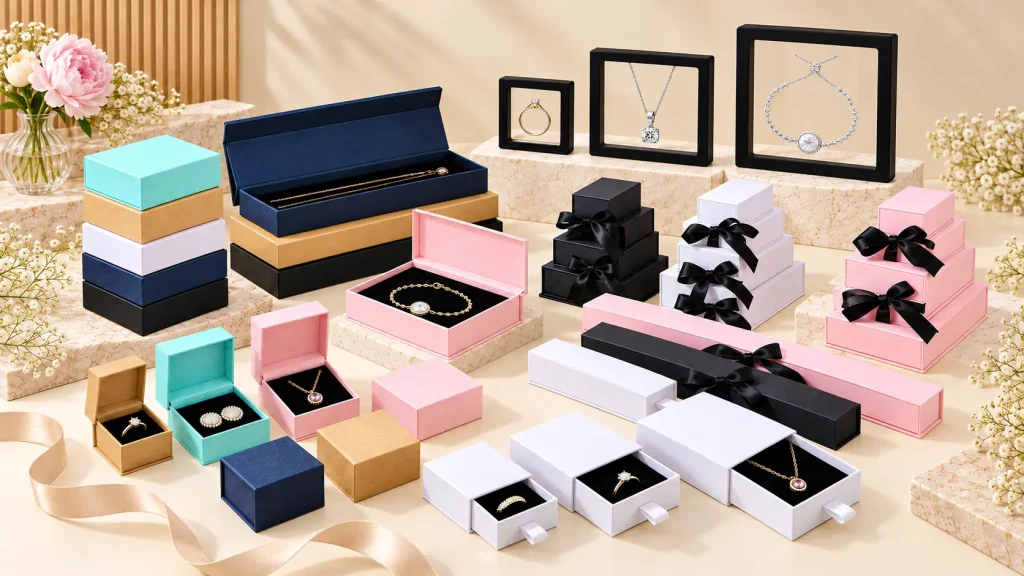
Custom Jewelry Box Sizes Display | FUYI PACKING

Jewelry Packaging Size Guide

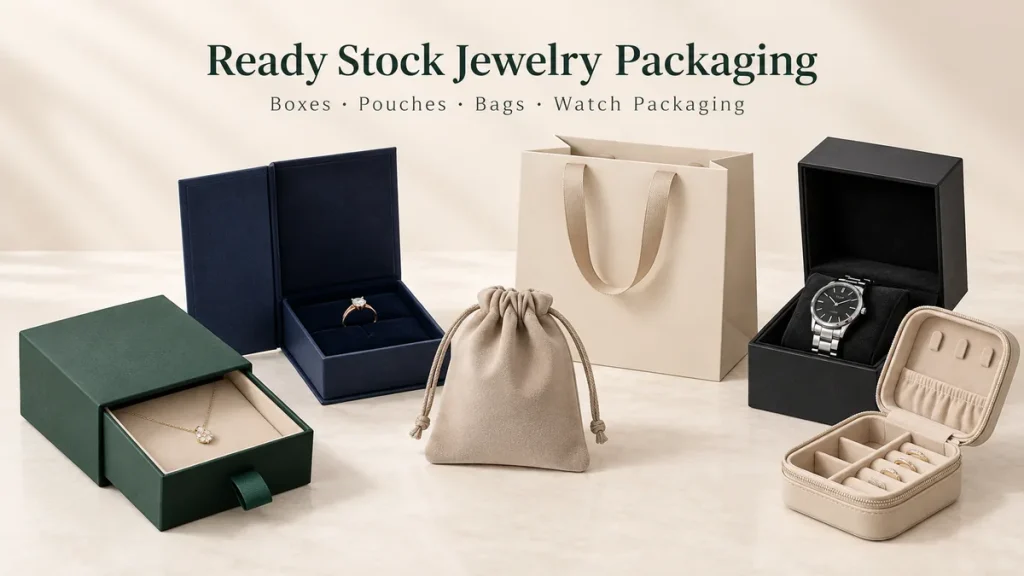
Choosing the right jewelry packaging size is about more than fitting the product inside a box. Box dimensions affect jewelry presentation, insert design, product protection, shipping volume and overall packaging cost. For jewelry brands and retailers, a practical size guide can make early purchasing decisions easier. The dimensions below are common reference sizes rather than fixed industry standards, because the final box size should always be confirmed according to the jewelry dimensions, insert thickness and packaging structure. Jewelry Packaging Size Reference Table The following dimensions can be used as a practical starting point when planning packaging for rings, earrings, pendants, necklaces, bracelets and jewelry sets. Jewelry Type Reference Box Size Typical Application Key Consideration Ring / Earrings 5 × 5 × 3.5 cm Rings, studs, small earrings Compact size with enough depth for foam or velvet inserts Pendant 7 × 7 × 3.5 cm Pendants, small necklaces, earrings Allows more display space around the jewelry Necklace / Bracelet 7 × 9 × 3 cm Necklaces, bracelets, longer earrings Rectangular format provides more space for chain control Jewelry Set 9 × 9 × 3 cm Ring and earring sets, necklace sets, coordinated jewelry Provides enough display area for multi-position inserts Important: These dimensions are purchasing references, not universal standards. Jewelry size, insert structure, lid clearance and box construction should all be checked before final production. Ring and Earring Box Size Reference Size: 5 × 5 × 3.5 cm Compact square boxes are commonly used for rings, stud earrings and other small jewelry items. A size around 5 × 5 × 3.5 cm provides enough internal space for a foam, velvet or microfiber insert while keeping the outer package relatively small. The internal height is especially important for rings with raised stones. If the ring setting is high, additional clearance may be required between the jewelry and the inside of the lid. Different box structures can also affect the usable internal space. Explore our Wholesale Jewelry Boxes for different packaging structures. Pendant Jewelry Box Size Reference Size: 7 × 7 × 3.5 cm Pendants usually need more display area than rings because the pendant itself should remain centered while part of the chain is secured behind or beneath the insert. A 7 × 7 cm square format provides more visual space around the jewelry and can support different insert layouts. The final dimensions should still be adjusted according to pendant size and chain length. Necklace and Bracelet Box Size Reference Size: 7 × 9 × 3 cm Necklaces and bracelets often benefit from a rectangular box because the longer internal area provides additional space for chains, retention slots and product positioning. A size around 7 × 9 × 3 cm can work well for many necklace and bracelet applications, but wider pendants, rigid bangles or larger jewelry pieces may require a larger format. Drawer packaging is frequently used for this type of jewelry because it provides a clean presentation and works with several insert materials. See our Wholesale Drawer Jewelry Boxes . Jewelry Set Box Size Reference Size: 9 × 9 × 3 cm Jewelry sets require more internal space because the insert needs to hold several products while keeping the layout visually balanced. A 9 × 9 × 3 cm box can be a useful starting point for compact jewelry sets, such as a ring with earrings or a pendant with matching earrings. Larger necklace and bracelet combinations may require a wider or deeper box. For coordinated packaging, you can also explore our Wholesale Jewelry Packaging Sets . How Insert Thickness Changes the Box Size The outer dimensions of a jewelry box cannot be selected only by measuring the jewelry. The insert takes up part of the usable internal space and can significantly affect the required box height and width. Foam inserts, velvet-covered foam, microfiber-covered inserts and paperboard inserts all have different thicknesses. A deeper ring slot or thicker padded insert may require a taller box, while a thin paper insert may allow a more compact packaging structure. The jewelry itself also needs enough clearance above the insert. Rings with high stones, thick bracelets and three-dimensional pendants should be checked carefully before the box height is confirmed. For more information about insert design, read our Jewelry Box Inserts Guide . Why Smaller Packaging Can Reduce Shipping Cost Box dimensions affect more than product presentation. They also influence carton packing efficiency, storage requirements and international shipping volume. Oversized jewelry boxes may increase the number and size of export cartons required for the same order quantity. For large wholesale orders, even a small reduction in individual box dimensions can improve carton utilization. However, reducing the box size too aggressively can create fitting problems, reduce product protection or make the packaging look crowded. The objective should be to use the smallest practical dimensions that still provide enough space for the jewelry and insert. Ready Stock Size or Fully Custom Size? Ready-stock jewelry packaging is often the simplest option when a standard size already fits the product. It can reduce development time and is suitable for brands testing new products or placing smaller packaging orders. Explore available options in our Ready-to-Ship Jewelry Packaging category. A fully customized size becomes more useful when the jewelry has unusual dimensions, requires a special insert, or when the brand wants to minimize packaging volume around the product. Order quantity also influences which option is practical. Our Jewelry Packaging MOQ Guide explains how MOQ differs between ready-stock packaging and more customized projects. How Box Size Affects Packaging Cost Larger packaging normally requires more paper, board, fabric, foam and shipping space. However, size is only one part of the total packaging cost. Material, structure, insert complexity, logo finishing and order quantity can all have a greater impact on unit price than a small dimensional difference. This means the lowest-cost solution is not always simply the smallest box. A practical packaging design should balance size, material use, jewelry protection and production efficiency. For a broader explanation, read our Custom Jewelry Packaging

Jewelry Packaging Size Guide Read More »

Jewelry Box Inserts Guide | FUYI PACKING

Jewelry Box Inserts Guide: Foam, Velvet & Paper

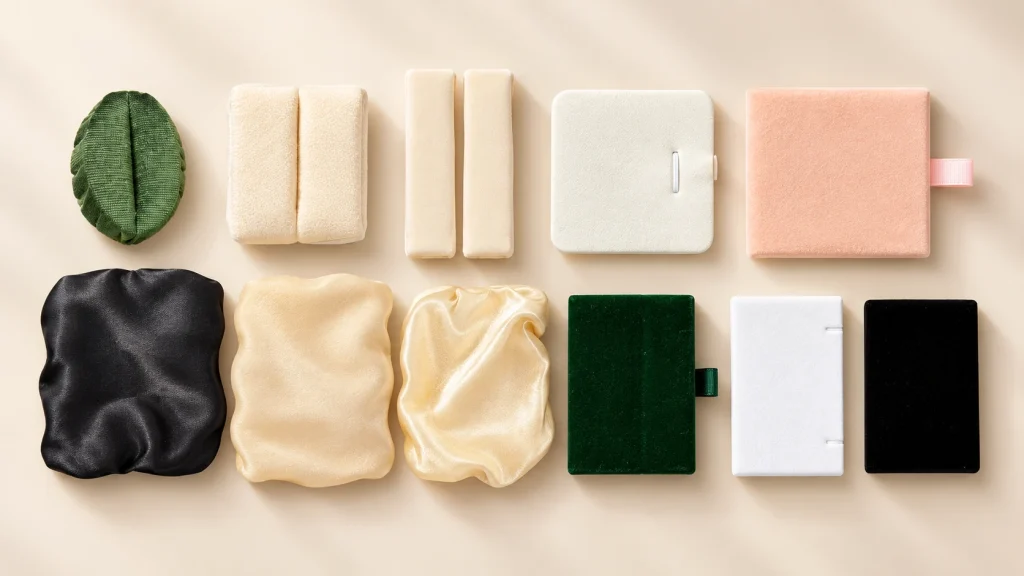
Jewelry box inserts are one of the most important parts of jewelry packaging, yet they are often considered only after the outer box has already been selected. A well-designed insert does more than hold jewelry in place. It affects product protection, presentation, box size, shipping stability and the overall unboxing experience. For jewelry brands and retailers, the right insert should be designed around the jewelry itself. Rings, earrings, necklaces and bracelets have different shapes and support requirements, so using one insert design for every product can lead to poor presentation or insufficient protection. What Is a Jewelry Box Insert? A jewelry box insert is the internal component that supports, positions and protects the jewelry inside the packaging. Depending on the product, it may include slots, cuts, holes, elastic bands, raised platforms, recessed areas or shaped supports. The insert also determines how the jewelry appears when the customer opens the box. A ring should sit upright and centered. Earrings should remain symmetrical. A necklace pendant should stay visible while the chain is controlled behind or beneath the insert. Bracelets need enough support to prevent movement without unnecessarily increasing the size of the box. For this reason, the insert should normally be developed together with the outer box rather than treated as a separate accessory. You can explore different structures in our Wholesale Jewelry Boxes category. How to Choose Inserts for Different Jewelry Types Different jewelry products require different support structures. The main objective is to hold the product securely while keeping the presentation clean and easy for the customer to understand. Jewelry Type Common Insert Design Key Consideration Rings Central slit or padded ring slot Hold the ring upright without excessive pressure Earrings Two small holes or cuts Keep both earrings aligned and symmetrical Pendants Pendant cutout with chain-control slots Keep the pendant centered and prevent chain tangling Necklaces Multiple chain slots or retention points Control the chain and maintain a balanced display Bracelets Horizontal slits, padded support or cushion Prevent movement while maintaining bracelet shape Jewelry Sets Multi-position custom insert Keep different jewelry pieces visually balanced Ring Inserts Ring inserts commonly use a narrow slit in foam or a padded material. The slot must be wide enough for the ring to enter without excessive pressure, but tight enough to keep the ring upright during display and transport. For larger rings or rings with high settings, the insert depth and box clearance should also be checked so that the jewelry does not touch the inside of the lid. Earring Inserts Earrings generally require two precisely positioned holes or narrow cuts. The spacing should match the product so that both earrings remain symmetrical when displayed. Stud earrings, drop earrings and hoop earrings may require different insert layouts. Longer earrings may also need additional retention points to prevent movement. Necklace and Pendant Inserts Necklace inserts normally require more planning because the chain must be controlled while the pendant remains visible. Small slots can be positioned near the upper or lower section of the insert so that excess chain can be secured behind it. The position of the pendant should also be considered carefully. If it sits too high, too low or off-center, the entire packaging presentation may look unbalanced. Bracelet Inserts Bracelet packaging can use horizontal slits, cushions, elastic retention or raised padded supports. The most suitable structure depends on whether the product is a chain bracelet, rigid bangle, cuff or another design. Bracelet thickness should be confirmed before production because an insert designed for a thin chain bracelet may not work for a wider or more rigid product. Foam, Velvet, Paperboard or Microfiber? There is no single insert material that is best for every jewelry product. Material selection should consider appearance, support, production cost, packaging structure and the positioning of the jewelry brand. Foam Inserts Foam is one of the most widely used materials for jewelry box inserts. It can be produced in different thicknesses and densities and can be cut into slots, holes and custom shapes. Black and white foam are common for standard packaging. Exposed foam is practical, while covered foam can create a more premium appearance. Velvet-Covered Foam Velvet-covered foam combines the structural support of foam with a softer, more luxurious surface. It is frequently used for rings, earrings, pendants and premium jewelry packaging. Velvet also helps visually separate the jewelry from the insert, especially when contrasting colors are selected. Paperboard Inserts Paperboard inserts can be die-cut, folded and shaped to support different jewelry products. They are useful for brands that prefer a more paper-based packaging system and want to reduce the use of foam. However, paperboard generally provides less cushioning than foam, so the structure must be designed carefully for delicate jewelry. Microfiber-Covered Inserts Microfiber creates a smooth and refined surface and is often selected for premium jewelry packaging. It can provide a more modern appearance than traditional velvet while still offering a soft contact surface for jewelry. If you are also comparing outer packaging materials, see our Jewelry Box Materials Guide . Insert Depth, Slots and Cutouts Matter A jewelry insert can appear simple, but small dimensional differences can significantly affect product fit and presentation. If a ring slot is too narrow, inserting the ring may require too much pressure. If it is too wide, the ring may lean or move during shipping. Necklace retention slots that are too shallow may allow the chain to escape, while excessively deep cuts can make the product difficult to remove. The same principle applies to earrings and bracelets. Slot width, insert thickness, cutting depth and spacing between jewelry positions should be confirmed using the actual product dimensions whenever possible. Practical Tip: If one insert will be used for several jewelry sizes, test it with both the smallest and largest products before approving bulk production. Should the Insert Be Customized Together With the Box? In many custom packaging projects, the answer is yes. The insert and the outer box directly influence each other. A thicker insert may require a taller

Jewelry Box Inserts Guide: Foam, Velvet & Paper Read More »