Velvet vs Microfiber vs Leather Jewelry Pouches: Which Is Best for Your Brand?
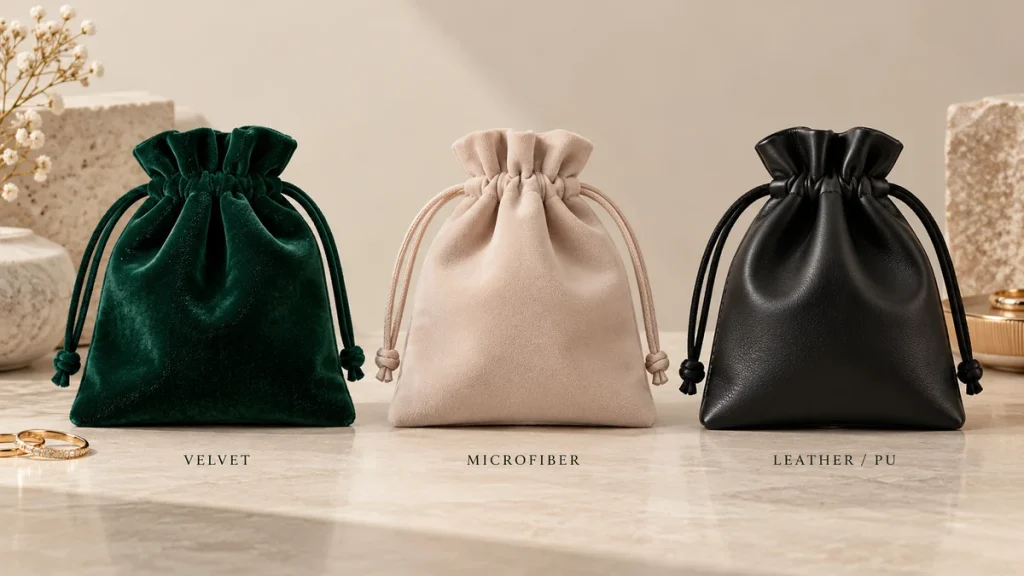
Choosing a jewelry pouch is not only about selecting a color. The material affects how the packaging feels, how well it protects the jewelry, how the logo appears and how customers perceive the brand. Velvet, microfiber and leather-style jewelry pouches are all widely used, but each material is better suited to different products, price points and brand positioning. This guide compares the three options to help jewelry brands and retailers choose more confidently. Why Jewelry Pouch Material Matters A jewelry pouch is often one of the first packaging components customers touch. Its texture, structure and finish can immediately influence whether the packaging feels traditional, modern, practical or premium. Material choice also affects production. Some materials are better suited to hot stamping, while others work well with printed, embossed or debossed logos. Durability, lint, flexibility and unit cost can also vary significantly. For brands buying several pouch styles, understanding these differences can make it easier to create consistent packaging across rings, earrings, necklaces, bracelets and other jewelry products. Velvet Jewelry Pouches Velvet jewelry pouches have a soft surface and a traditional premium appearance. They are commonly used for rings, earrings, necklaces, bracelets and gift packaging, especially when the brand wants a warmer or more luxurious presentation. Velvet works particularly well with simple metallic logos such as gold or silver hot stamping. Dark green, black, navy, burgundy and neutral colors can create a strong gift-oriented look without requiring a complex pouch structure. The main consideration is surface texture. Traditional velvet may attract more lint than smoother materials, so brands should consider how the pouch will be stored, handled and presented before choosing it. Explore our Wholesale Velvet Jewelry Pouches . Microfiber Jewelry Pouches Microfiber jewelry pouches have a smoother and cleaner appearance than traditional velvet. The material is soft enough for jewelry packaging while maintaining a more modern visual style. Microfiber is especially useful for fine jewelry, silver jewelry and brands that prefer minimalist packaging. It can work with custom colors and several logo techniques while maintaining a relatively refined surface. For many jewelry brands, microfiber provides a useful balance between premium presentation, production flexibility and cost. It is therefore suitable for both everyday jewelry collections and higher-value product lines. View our Custom Microfiber Jewelry Pouches . Leather Jewelry Pouches Leather and PU leather jewelry pouches normally have more structure than velvet or microfiber. They can create a stronger premium impression and are often chosen for watches, rings, bracelets and higher-value jewelry. Their smoother surface also makes them suitable for branding techniques such as embossing, debossing and printed logos. This can be useful for brands that prefer a subtle tone-on-tone logo rather than a metallic finish. Leather-style pouches are generally more durable and can feel more substantial in the hand. However, the structure, material thickness and finishing requirements may increase production cost compared with softer pouch materials. Explore our Wholesale Leather Jewelry Pouches . Velvet vs Microfiber vs Leather: Quick Comparison Material Appearance Durability Logo Options Typical Positioning Velvet Soft, elegant, traditional Medium Hot stamping, printed logo Gift and luxury packaging Microfiber Clean, smooth, modern Medium–High Printing, hot stamping Modern jewelry brands Leather / PU Premium, structured High Embossing, debossing, printing Premium and luxury products Practical Tip: The best pouch is not necessarily the most expensive one. Choose the material that matches your jewelry value, customer expectations, logo design and packaging budget. Which Jewelry Pouch Is Best for Your Brand? Choose Velvet If… Your brand wants a soft, traditional and gift-oriented presentation. Velvet is especially suitable for jewelry collections where tactile feel and visual warmth are important. Choose Microfiber If… You want packaging that feels clean, modern and refined without becoming overly structured. Microfiber is a strong all-round option for brands that want a good balance between appearance, flexibility and cost. Choose Leather or PU If… Your brand is positioned at the premium end of the market and durability, structure and a high-end finish are priorities. Leather-style materials are also well suited to embossed and debossed branding. If you want to compare a broader range of pouch styles, visit our Wholesale Jewelry Pouches collection. Can Jewelry Pouches Be Customized With a Logo? Yes. Jewelry pouches can be customized with different logo techniques depending on the material, logo design and required visual effect. Common options include hot stamping, printed logos, embossing, debossing and UV printing. Gold, silver, black, white and rose-gold effects are frequently used for jewelry packaging, although the final result should always be tested on the selected material. Custom pouch projects can also include different colors, dimensions, ribbon styles, drawstrings, closures and internal structures depending on the jewelry type and brand requirements. MOQ and Production Considerations Order quantity is another important factor when selecting jewelry pouches. For brands testing a new collection or packaging concept, ready-stock options can provide a lower-risk starting point. At FUYI PACKING, ready-stock packaging can start from 50 pcs, with logo printing supported on suitable products. For custom colors, sizes or more specific constructions, the typical MOQ starts from 200 pcs. Ready-stock packaging is useful for smaller launches and faster purchasing, while fully customized pouches are better suited to brands that need consistent colors, dimensions and branding across a larger product range. Jewelry Pouch FAQ Which jewelry pouch material looks most luxurious? Velvet and leather-style materials are both commonly used for premium packaging. Velvet creates a softer traditional luxury look, while leather or PU creates a more structured and contemporary premium appearance. Is microfiber suitable for fine jewelry? Yes. Microfiber has a smooth, soft surface and is widely used for rings, necklaces, bracelets and other fine jewelry packaging. Which material is best for logo customization? It depends on the desired effect. Velvet and microfiber work well with hot stamping and printing, while leather-style materials are particularly suitable for embossing and debossing. Can I order several pouch colors? Yes, depending on the selected product and order quantity. Ready-stock colors are suitable for smaller orders, while custom colors normally require a higher MOQ. Choose the Right Jewelry Pouch
Velvet vs Microfiber vs Leather Jewelry Pouches: Which Is Best for Your Brand? Read More »