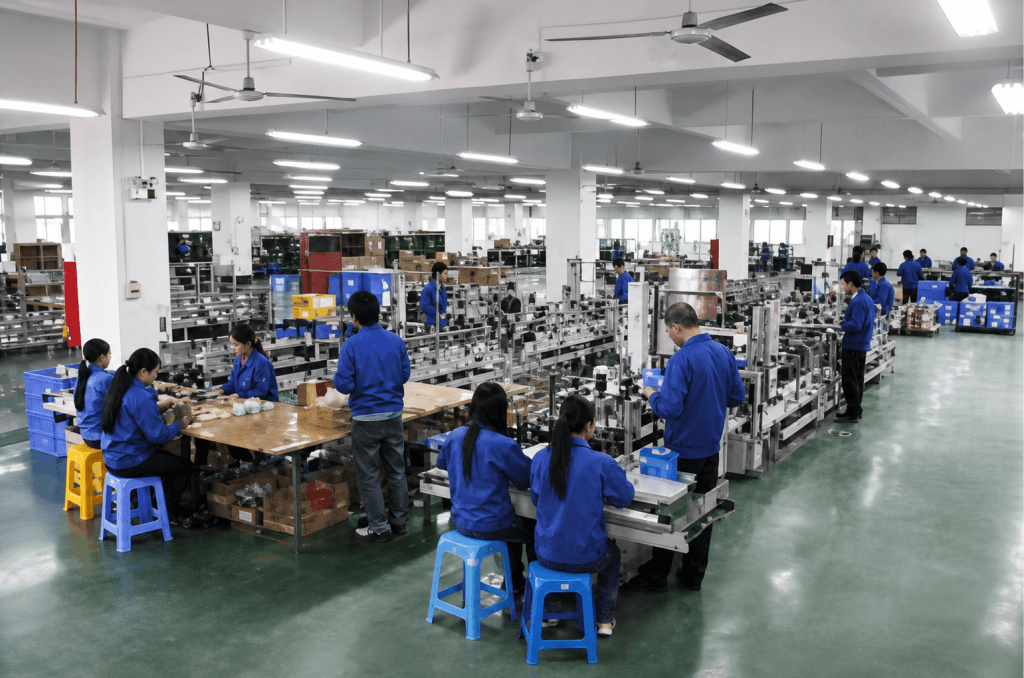
Choosing a jewelry packaging supplier involves much more than comparing the appearance or price of several packaging boxes. Material consistency, structural accuracy, logo placement, communication, quality inspection and export packing can all affect whether an order is delivered on time and matches the approved sample.
This guide provides a practical process for jewelry brands, retailers and wholesalers that need to compare suppliers before placing a wholesale or custom packaging order.
1. Define Your Packaging Requirements Before Comparing Suppliers
Supplier quotations are difficult to compare when each company receives different or incomplete information. Before requesting prices, prepare a clear packaging brief containing:
- Jewelry or product type
- Required packaging dimensions
- Target customer and market position
- Retail, e-commerce or wholesale sales channel
- Preferred packaging style and structure
- Estimated order quantity
- Logo and branding requirements
- Destination country or region
- Required delivery date
Reference images are helpful, but you should also explain which features are essential. A supplier needs to know whether you require the same box structure, color, surface texture, insert design or only a similar overall visual style.
Provide your logo in a vector format such as AI, EPS, PDF or SVG whenever possible. You should also confirm whether you need an in-stock product with a customized logo or a completely custom-made packaging solution.
2. Confirm Experience With Your Product Type
A supplier that produces general paper gift boxes may not fully understand jewelry inserts, necklace fixing points, earring holders, ring slots or watch cushions.
Ask the supplier to provide examples of packaging made for products similar to yours. Relevant experience can reduce unnecessary revisions and help the supplier recommend more suitable dimensions, structures and inserts.
An experienced jewelry packaging supplier should be familiar with common structures such as:
- Drawer jewelry boxes
- Magnetic closure boxes
- Book-style jewelry boxes
- Double-door presentation boxes
- Velvet and microfiber jewelry pouches
- PU leather jewelry cases
- Jewelry display cards and stands
- Paper gift bags and coordinated packaging sets
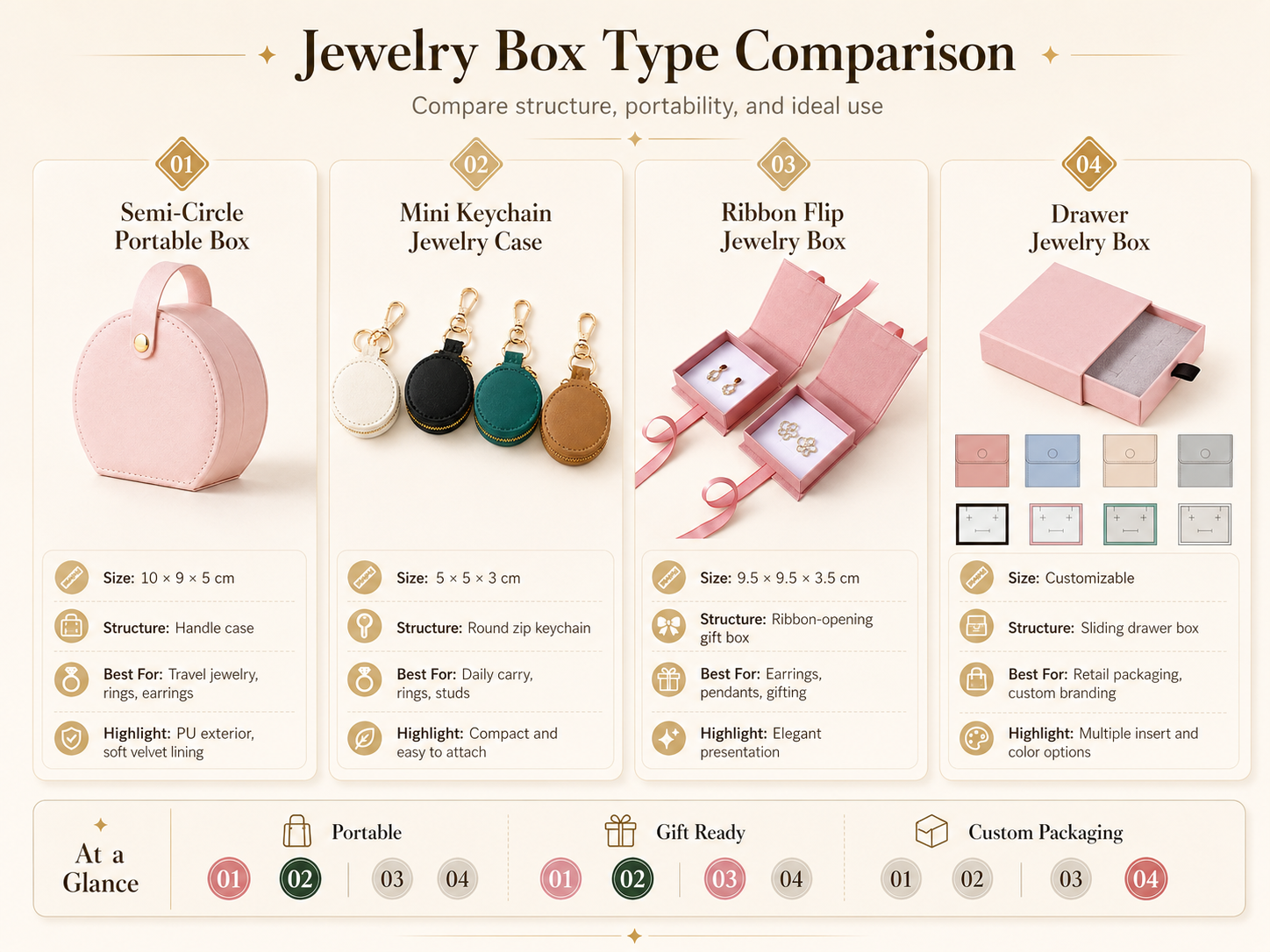
When a project requires a complete packaging collection, the supplier should also understand paper bags, jewelry cards, tissue paper, ribbons, stickers, polishing cloths and shipping boxes.
3. Evaluate the Supplier’s Material Knowledge
A professional supplier should be able to explain the practical differences between rigid cardboard, specialty paper, kraft paper, velvet, microfiber, PU leather, satin, fabric and other packaging materials.
Material recommendations should consider more than appearance. The supplier should also evaluate:
- Durability and surface protection
- Compatibility with the selected logo process
- Insert structure and jewelry protection
- Minimum order quantity
- Production consistency
- Shipping weight and carton volume
- Target retail price and brand positioning
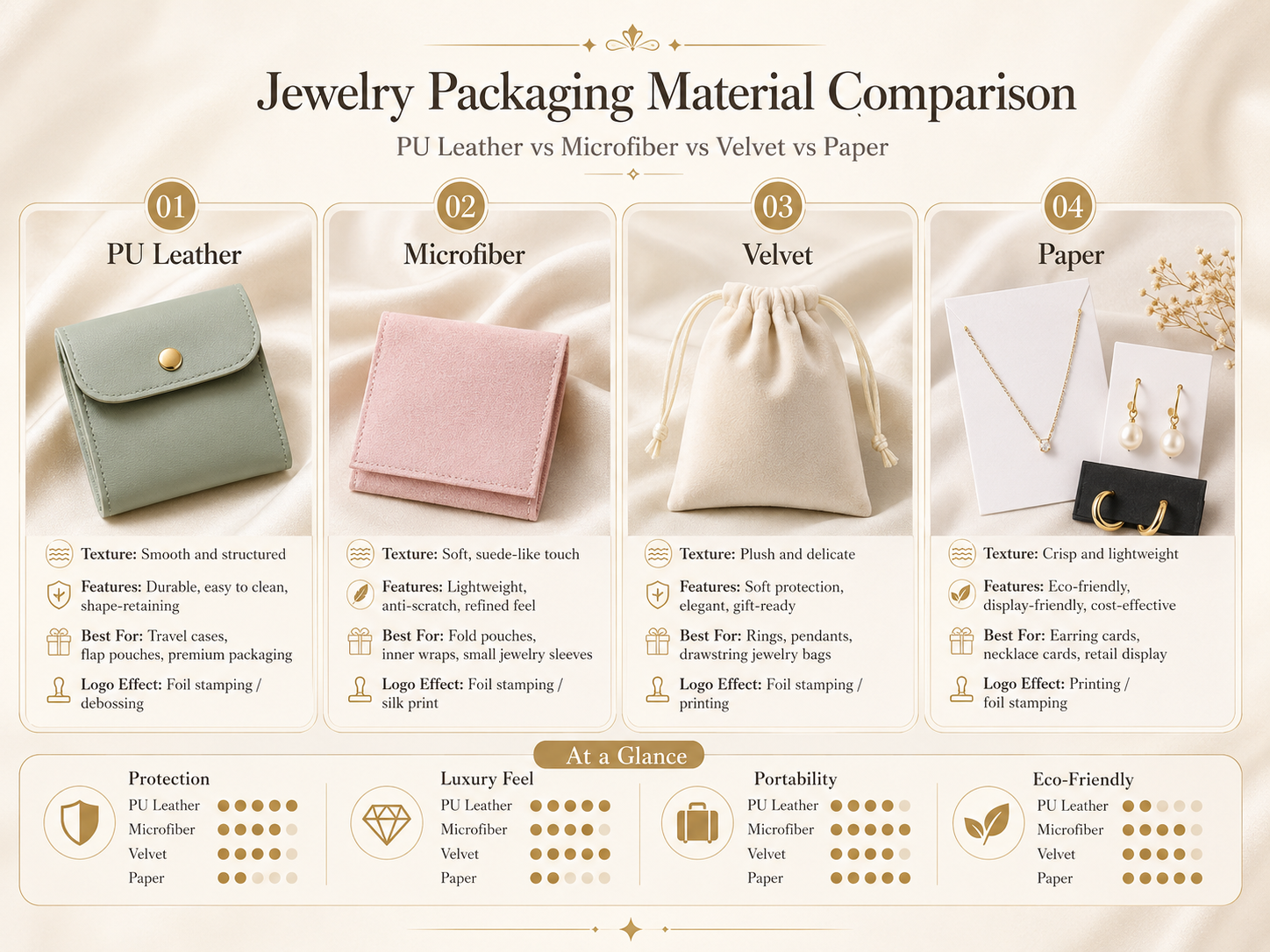
Ask how colors will be controlled between samples and mass production. Colors displayed on a computer or phone screen should not be used as the only approval standard. A physical color sample, Pantone reference or approved material swatch provides a more reliable comparison.
For additional material comparisons, review our jewelry packaging materials guide .
4. Review Customization Capabilities
Common logo customization methods include hot foil stamping, printing, embossing and debossing. Each process has limitations relating to line thickness, logo size, material type and surface texture.
A qualified supplier should review your artwork before confirming the process. The recommended logo method should be based on the packaging material and the finish you want to achieve, rather than using the same method for every product.
You should also confirm whether the supplier can customize:
- Packaging dimensions
- Box or pouch structure
- Exterior and interior colors
- Jewelry inserts
- Surface paper or fabric
- Ribbon, hardware and accessories
- Coordinated gift bags and packaging accessories
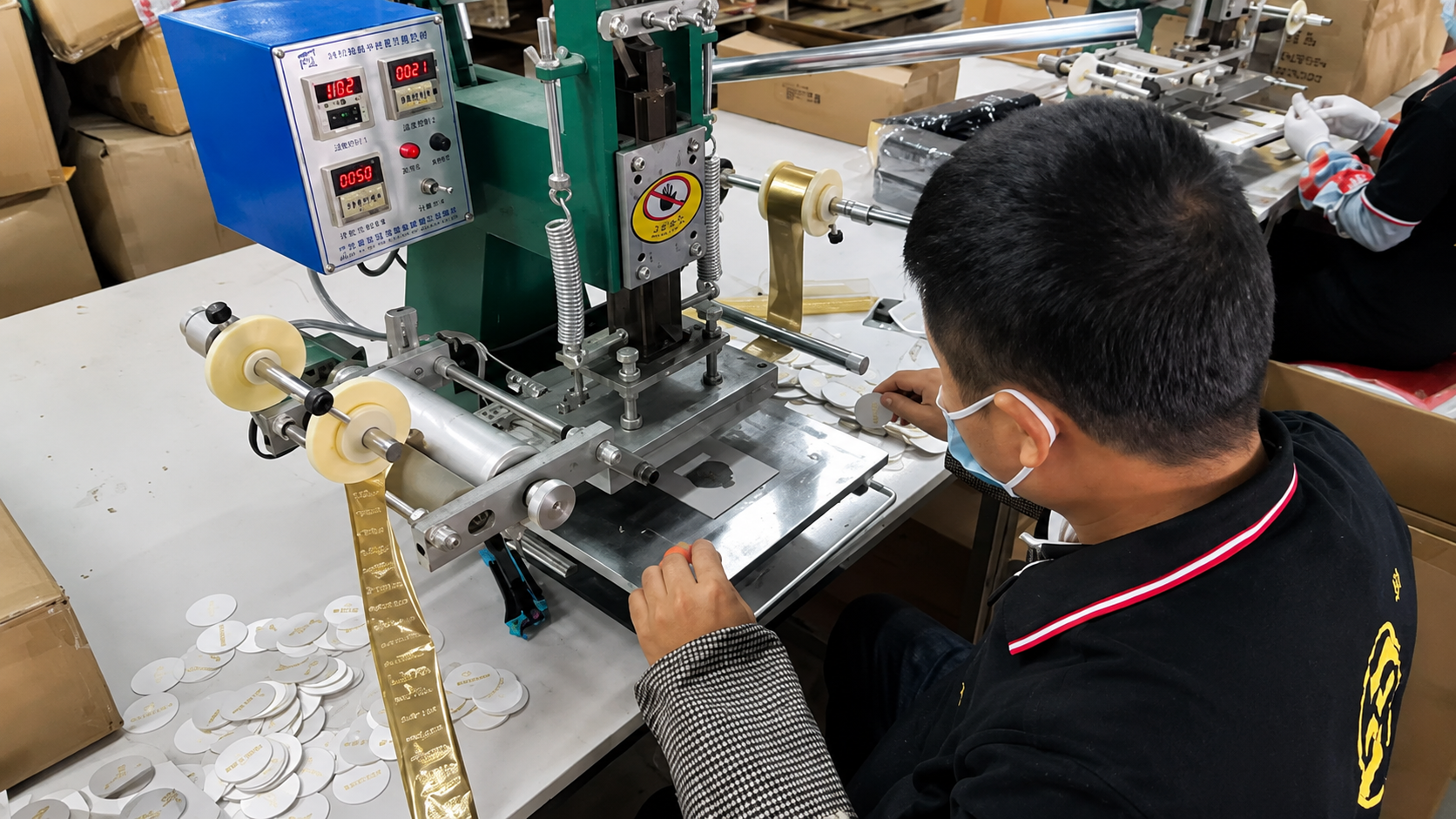
It is normal for some packaging components or finishing processes to be completed by specialized production partners. However, the main supplier should still control specifications, scheduling, assembly and final inspection.
5. Compare Samples, Not Only Quotations
A low quotation has little value when the structure, material or logo finish does not meet your brand requirements. For important custom projects, request a sample before approving mass production.
Evaluate the sample under normal lighting and inspect:
- Box corners and edge finishing
- Lid alignment and closure
- Drawer movement and fit
- Magnetic closure strength
- Fabric cleanliness and texture
- Insert dimensions and jewelry fit
- Logo size, position and finish
- Glue marks, scratches or surface damage
Place your actual jewelry inside the sample. Shake it gently and simulate normal handling. Confirm that necklaces remain separated, earrings stay together, rings remain upright and watches do not move excessively.
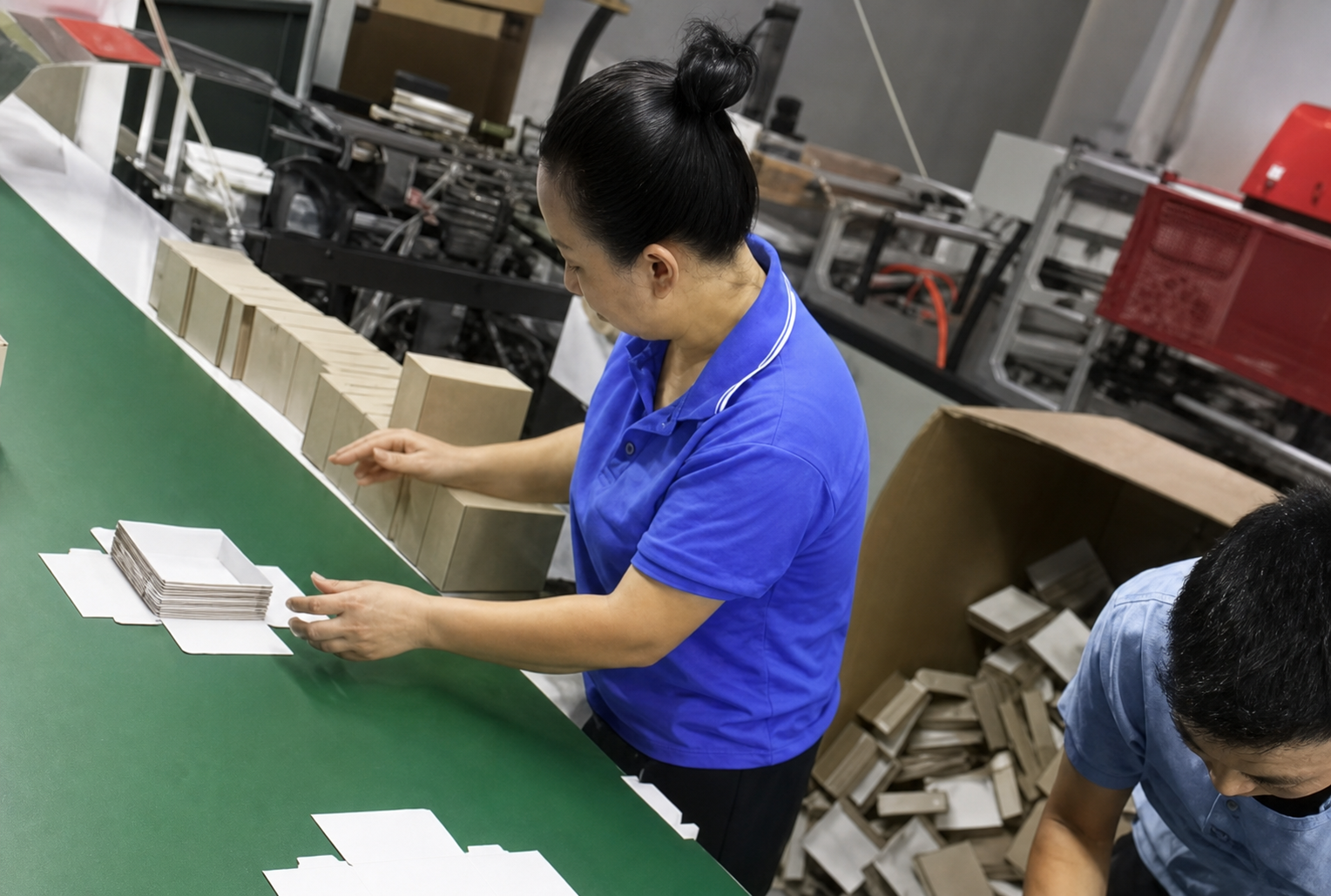
Record all required revisions in writing and keep a final approved sample or detailed approval document as the production reference.
6. Understand MOQ and the Complete Cost Structure
In-stock products with a customized logo usually have a lower minimum order quantity than packaging made with a new size, color, structure or material.
Confirm whether the minimum order quantity applies to the complete order or separately to each color, size and style. You should also ask for the following costs to be listed separately:
- Unit price
- Sample cost
- Printing plate or tooling cost
- Custom insert cost
- Individual packing cost
- Export carton cost
- Shipping or freight cost
A suitable supplier should help you choose an option that matches the current stage of your business instead of recommending unnecessary customization.
Brands requiring a smaller initial quantity can first review our in-stock jewelry packaging . Projects requiring custom dimensions, structures or coordinated collections can explore our custom-made packaging options .
7. Assess Communication Quality
Clear communication is an important part of production control. A reliable supplier should summarize specifications, identify missing information and confirm all changes in writing.
A fast reply is helpful, but an accurate reply is more important. Look for questions about:
- Product dimensions and weight
- Packaging material
- Insert requirements
- Artwork and logo size
- Order quantity
- Delivery destination
- Required completion date
Be cautious when a supplier immediately confirms every request without discussing technical limitations. An experienced supplier will explain trade-offs and suggest alternatives when a requested material, construction or finish may create quality or production risks.
8. Evaluate the Quality Control Process
Ask which inspections are completed during production and before shipment. Depending on the product, quality checks may include:
- Dimensions and structure
- Material and color consistency
- Surface cleanliness
- Glue marks and edge finishing
- Logo position and clarity
- Magnetic closures and hardware
- Insert position and jewelry fit
- Product quantity and carton quantity
- Protective packing and carton condition
For larger orders or technically demanding products, agree on acceptable tolerances before production begins. Written standards help prevent disagreements during final inspection.
9. Review Certification and Compliance Information Carefully
Certification documents, test reports and market registrations should always be interpreted according to their stated scope. A document may apply only to a specific company, material, product, production site or testing standard.
A single certificate should not be treated as proof that every product meets every requirement in every market. The brand owner, importer and other responsible parties should confirm the requirements that apply to the destination and product.
FUYI PACKING provides selected certification and compliance documentation for applicable packaging projects. The availability and relevance of each document should be confirmed according to the selected product, material and destination.
10. Confirm the Production and Delivery Schedule
Request a clear project schedule covering:
- Artwork preparation and confirmation
- Sample production
- Sample review and approval
- Material preparation
- Mass production
- Quality inspection
- Packing and shipment
Production lead time should normally begin after the specifications, artwork, payment terms and other order details have been confirmed. It should not be calculated from the date of the first general inquiry.
Discuss peak-season capacity and the effect of delayed artwork or sample approval. For urgent launches, consider using in-stock packaging first and introducing fully customized packaging in a later production stage.
11. Check Export Packing and Shipping Support
Jewelry packaging can be damaged by compression, moisture, friction and repeated handling. Ask how finished products will be protected, counted and packed before shipment.
Export cartons should match the product weight, dimensions and selected transportation method. Delicate surfaces may require individual bags, tissue paper, dividers, protective sleeves or moisture-control measures.
Before choosing express delivery, air freight, rail freight or sea freight, confirm:
- Number of cartons
- Carton dimensions
- Gross and net weight
- Chargeable shipping weight
- Shipping terms
- Destination and delivery requirements
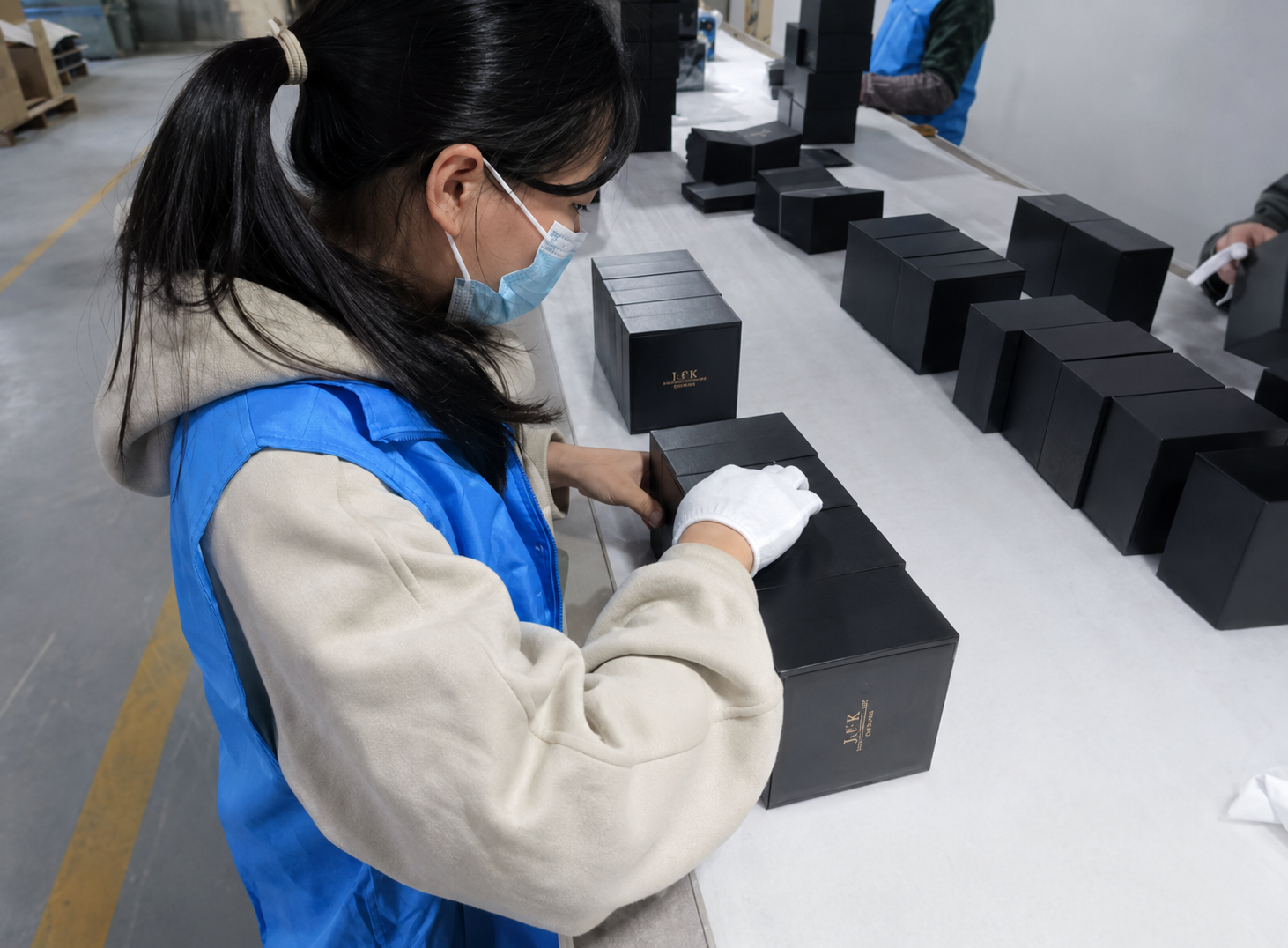
The supplier should provide accurate packing information so that the buyer or freight forwarder can estimate logistics costs.
12. Protect Consistency for Repeat Orders
Keep an approved specification sheet containing:
- Finished product dimensions
- Material names or material codes
- Color references
- Insert drawings
- Logo artwork and position
- Surface finishing requirements
- Individual and export packing details
Ask how the supplier records repeat orders. Materials may be discontinued and minor differences can occur between production batches, so repeat orders should still include a confirmation process rather than relying only on the previous order number.
Jewelry Packaging Supplier Evaluation Checklist
Before selecting a supplier, confirm that the company provides:
- Relevant experience with your product and packaging structure
- Clear explanations of materials and customization limitations
- Accurate written specifications and quotations
- Reasonable minimum order quantities
- Transparent sample, tooling and setup costs
- A clear sample and approval process
- Defined quality inspection standards
- A realistic production schedule
- Suitable export packing and shipping information
- Reliable records for repeat orders
Frequently Asked Questions
What information should I send to a jewelry packaging supplier?
Provide the packaging type, product dimensions, required quantity, preferred materials, colors, logo file, customization requirements, destination country and required delivery date.
Should I request a sample before placing a bulk order?
A sample is strongly recommended for custom packaging. It allows you to review the material, structure, color, insert, logo finish and jewelry fit before mass production.
What is a typical MOQ for jewelry packaging?
Minimum order quantities depend on the product and customization level. Selected in-stock products may start from 50 pieces, while fully customized packaging commonly starts from approximately 200 pieces. Final quantities should be confirmed for each project.
How can I make repeat packaging orders more consistent?
Keep an approved sample and written specification sheet covering dimensions, materials, colors, logo position, inserts and packing details. Confirm material availability before every repeat order.
Should I choose the supplier with the lowest quotation?
Price should be evaluated together with materials, sample quality, communication, quality control, production time and export packing. A lower price may create additional costs when the finished packaging does not meet the approved requirements.
Discuss Your Jewelry Packaging Project
FUYI PACKING provides in-stock packaging, custom logo services, packaging samples and coordinated packaging collections for jewelry brands, retailers and wholesalers. Send us your packaging type, dimensions, quantity, preferred material, logo file and destination.
Request a Jewelry Packaging Quote