The cost of custom jewelry packaging can vary significantly from one project to another. A ready-stock jewelry box with a custom logo may require much less development than a fully customized rigid box with a special structure, premium surface material, custom insert and multiple logo finishes.
For jewelry brands and retailers, the more useful question is therefore not simply “How much does a jewelry box cost?” but “What factors determine the final packaging cost?” Understanding these factors makes it easier to compare quotations, control budgets and choose the right level of customization.
At FUYI PACKING, jewelry packaging projects can include jewelry boxes, pouches, paper bags, inserts and complete packaging sets. The final quotation normally depends on quantity, dimensions, structure, materials, internal inserts, logo processes, accessories and shipping requirements.
Custom jewelry packaging does not have one standard price. The final cost is mainly determined by order quantity, packaging size, box structure, material, insert, logo finishing and international shipping. Ready-stock packaging with a custom logo is usually simpler to develop than a fully customized packaging project.
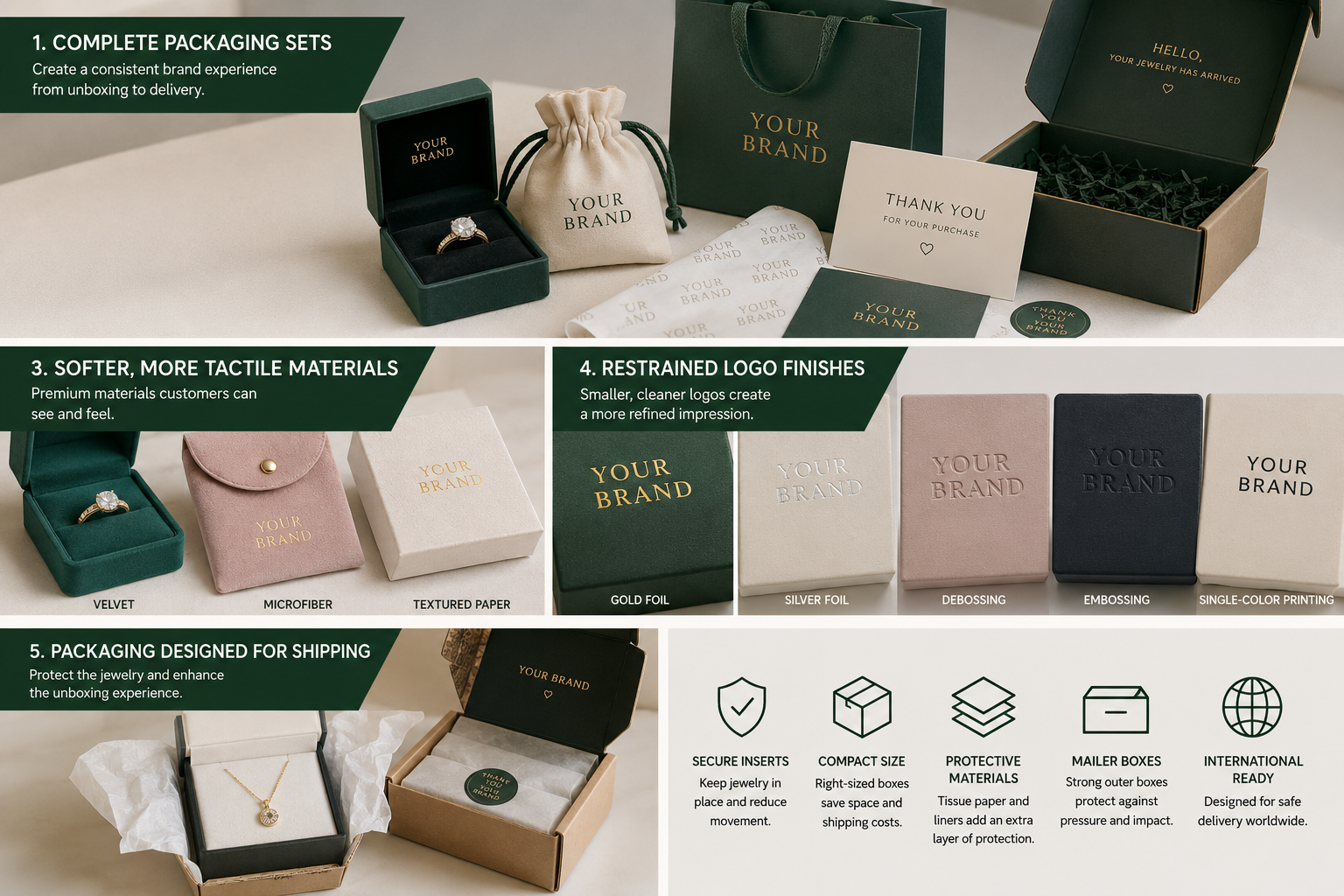
What Determines the Cost of Custom Jewelry Packaging?
Two jewelry boxes with similar outer dimensions can have very different production costs. One may use a standard paper surface and simple foam insert, while another may require specialty paper, a complex internal structure, magnets, ribbons and several finishing processes.
An accurate quotation therefore requires more information than the product name alone. The following factors usually have the greatest influence on the final packaging cost.
Order Quantity
Larger production quantities can distribute setup costs across more units, while smaller runs normally carry a higher average setup cost per piece.
Box Dimensions
Larger packaging normally requires more paperboard, surface material and insert material and can also increase shipping volume.
Structure
Drawer boxes, magnetic boxes and other complex structures may require more components and assembly than simpler box styles.
Material
Standard paper, specialty paper, velvet, microfiber and PU leather all have different sourcing and production requirements.
Internal Insert
Customized ring, necklace, bracelet and watch inserts can add both material and production complexity.
Logo & Finishing
Foil stamping, embossing, debossing, screen printing and UV printing have different setup and production requirements.
1. Order Quantity Has a Major Impact on Unit Cost
Quantity is one of the most important factors affecting custom jewelry packaging cost. Custom production may require structural preparation, cutting dies, printing plates, logo molds or machine adjustments before mass production begins.
When the order quantity is relatively small, these setup costs are distributed among fewer pieces. As quantity increases, the same setup costs can be distributed across more units, which can improve the average cost per piece.
For new jewelry brands or businesses testing a new collection, ready-to-ship jewelry packaging with custom logo options can sometimes provide a more practical starting point than developing an entirely new box structure.
For a more detailed explanation, see our Jewelry Packaging MOQ Guide .
2. Box Size Affects Both Production and Shipping Cost
Larger packaging normally requires more rigid paperboard, wrapping paper, insert material and production space. It also occupies more volume during storage and international transportation.
For this reason, unnecessarily large packaging can increase total cost without improving the customer experience. Rings and earrings generally require much less internal space than necklaces, bracelets, watches or complete jewelry sets.
The most efficient approach is to develop packaging around the jewelry itself. Correct box sizing can reduce unnecessary material use, improve presentation and help control shipping volume.
3. Packaging Structure Changes Production Complexity
Different box structures require different amounts of material, components and assembly. A traditional lid-and-base box has a different production process from a drawer box, magnetic book-style box or collapsible rigid box.
Drawer jewelry boxes require both an outer sleeve and an inner sliding tray. Magnetic jewelry boxes require magnets and additional assembly. Folding magnetic boxes can involve more complicated structural preparation but may provide advantages in storage and transportation before assembly.
The correct structure should therefore be selected according to the product, customer experience and budget rather than appearance alone.
You can compare more structures in our Custom Jewelry Boxes Guide .
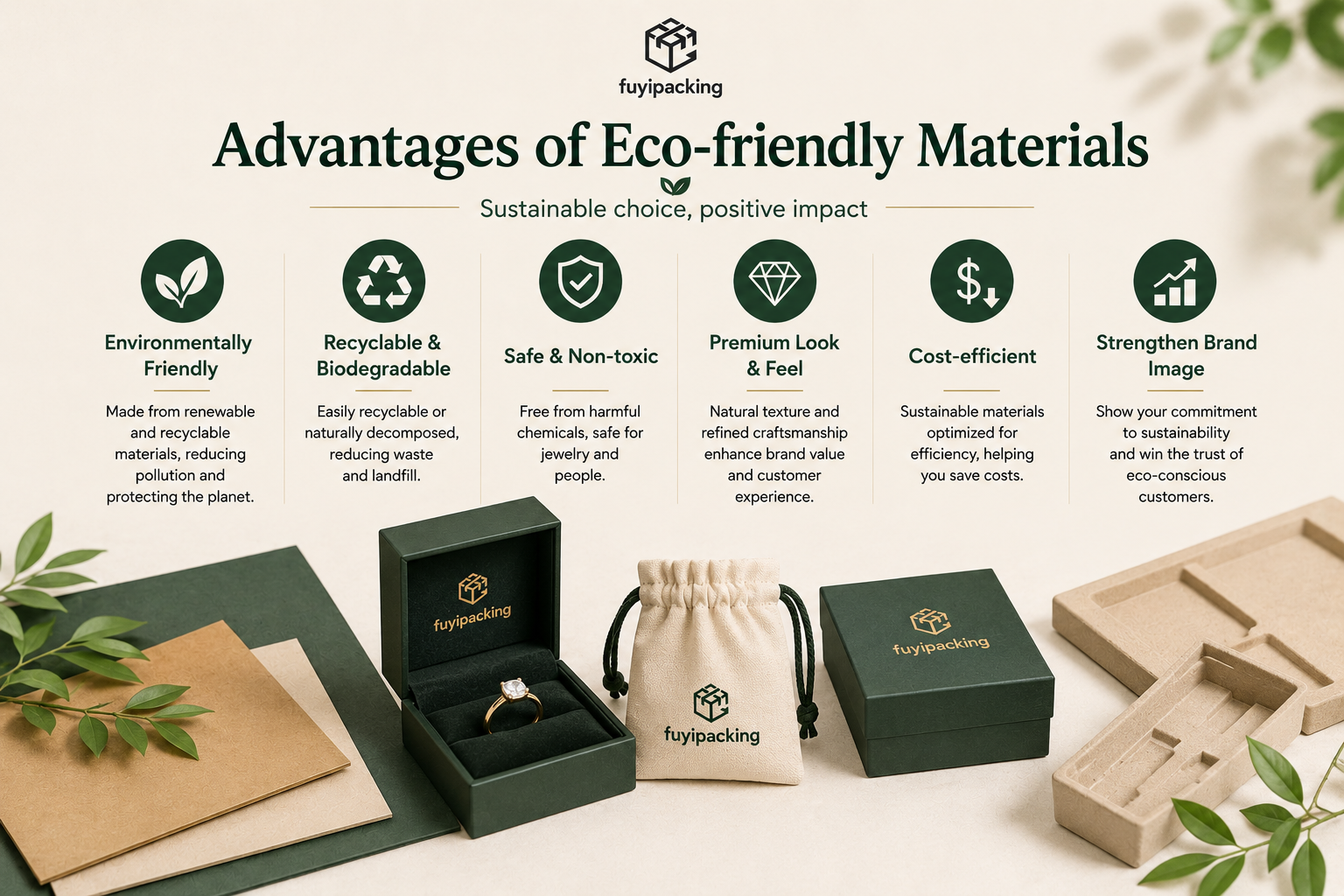
4. Material Selection Influences the Final Price
Jewelry packaging can use many different materials, including standard art paper, specialty paper, kraft paper, velvet, microfiber and PU leather. Each material has different sourcing, processing and finishing requirements.
Standard paper materials are often easier to source and produce, while premium textured papers, specialty colors and more complex surface materials may increase production cost. Velvet, microfiber and PU leather can create a more tactile experience but may also require different construction and logo processes.
The goal should not be to choose the most expensive material. The material should match the jewelry product, target customer and brand positioning.
For a detailed comparison, read our Jewelry Box Materials Guide .
5. The Insert Can Be a Significant Part of the Cost
The internal insert is often overlooked when buyers first estimate jewelry packaging cost. However, the insert directly affects product protection, presentation and production complexity.
A simple foam insert may require less processing than a customized velvet-covered insert with several jewelry positions. Necklace, bracelet and watch packaging can also require more complicated supports than a standard ring slot.
If several jewelry products can safely share one insert design, reducing the number of different packaging specifications may help simplify inventory and production. However, cost reduction should never compromise the stability of the jewelry inside the box.
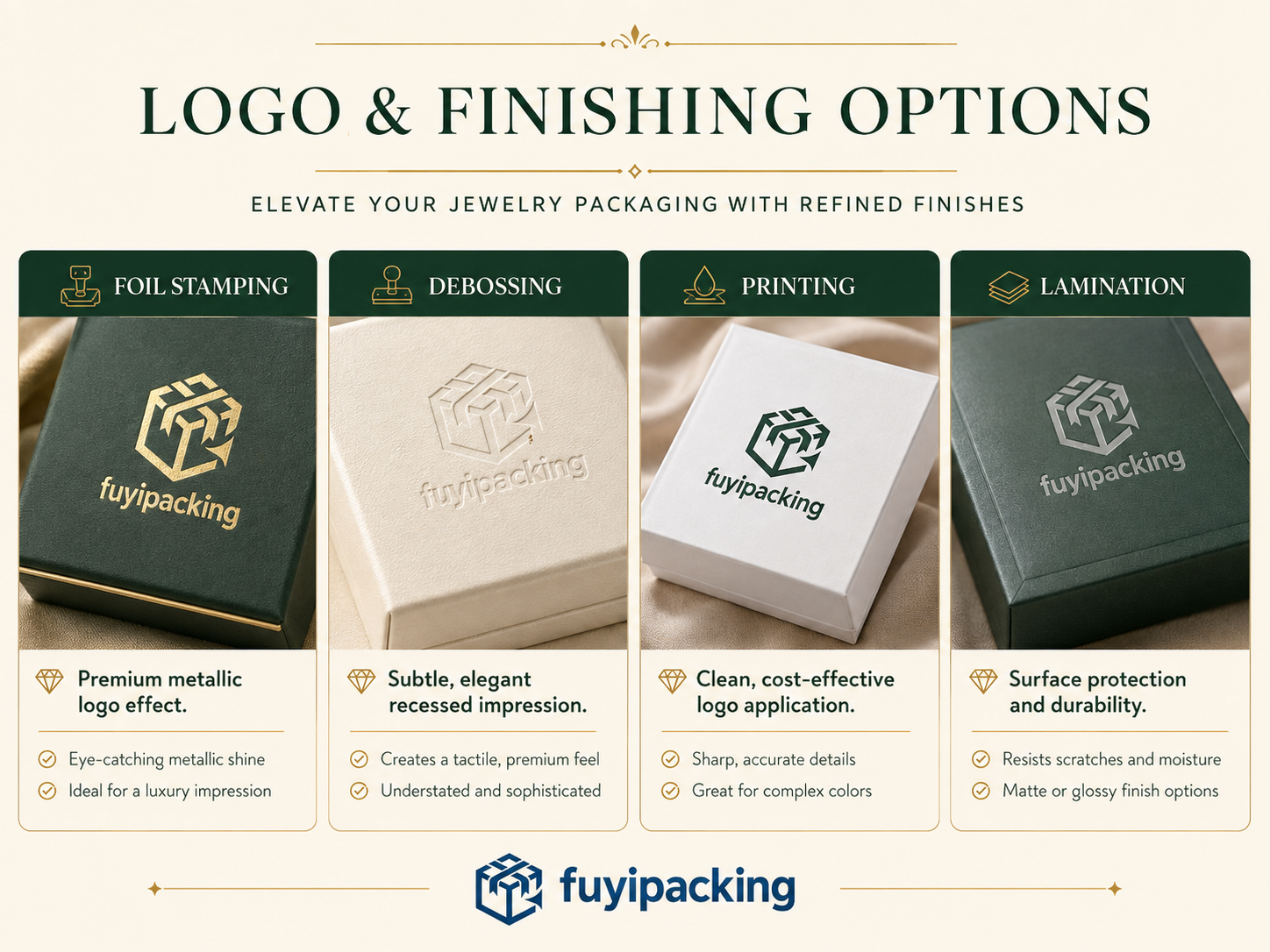
6. Logo Finishing Also Affects Packaging Cost
Different logo processes have different setup and production requirements. Hot foil stamping requires foil and a stamping plate, while embossing and debossing require dies or molds. Screen printing and UV printing also have different requirements depending on artwork, quantity and packaging surface.
For jewelry brands trying to control packaging cost, a simple logo with one well-selected finishing process can often create a stronger premium effect than using several decorative processes at the same time.
You can compare the main branding processes in our Best Logo Printing Methods for Custom Jewelry Packaging .
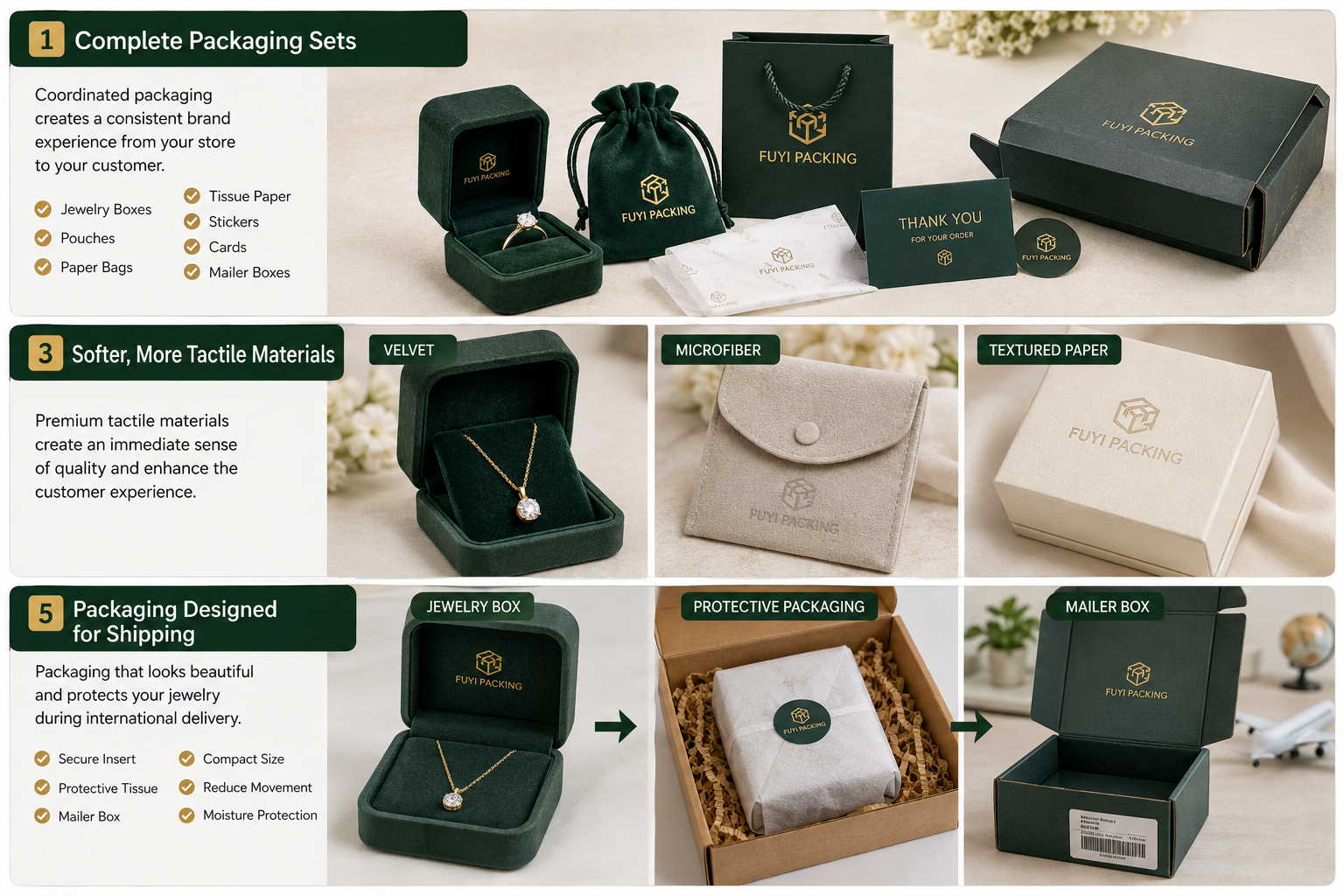
7. Accessories Add to the Total Packaging Cost
Packaging accessories can improve the customer experience, but every additional component also adds material, production and packing cost. Common additions include ribbons, magnets, jewelry pouches, paper bags, tissue paper, stickers, thank-you cards and shipping boxes.
Rather than adding every possible accessory, brands should decide which components contribute meaningfully to the presentation and customer experience. A coordinated jewelry box, pouch and paper bag can also be developed as a jewelry packaging set for a more consistent brand presentation.
Ready-Stock Packaging vs Full Custom Packaging
One of the easiest ways to control jewelry packaging cost is to select the correct level of customization. A new brand may not need the same packaging development as an established retailer ordering a complete customized collection.
| Packaging Option | Best For | Typical Customization | Cost Consideration |
|---|---|---|---|
| Ready Stock + Custom Logo | New brands, market testing and smaller orders | Logo and available standard colors or sizes | Less structural development is normally required |
| Full Custom Packaging | Established brands and unique packaging projects | Size, structure, color, insert, material and logo | More development and production preparation may be required |
Ready-stock packaging uses existing structures and dimensions, so it can reduce development complexity. Full customization provides greater freedom but may require more sampling, setup and production preparation.
How Can Jewelry Brands Reduce Packaging Cost?
Reducing packaging cost does not necessarily mean reducing packaging quality. In many projects, cost can be controlled by simplifying unnecessary specifications while keeping the elements customers actually notice.
Using fewer packaging sizes can increase the quantity of each individual specification. Choosing standard materials can reduce sourcing complexity, while simpler logo finishing can reduce production setup.
Correct box sizing is also important because smaller, well-designed packaging can reduce both material consumption and international shipping volume.
Manufacturing Cost Is Not the Same as Landed Cost
When comparing packaging suppliers, buyers should consider the total landed cost rather than only the factory unit price. International transportation, export cartons, customs duties, local taxes and final delivery can all influence the real cost of the packaging.
Rigid jewelry boxes can occupy considerable shipping volume because many styles cannot be flattened. Larger packaging can therefore create a significant difference between factory price and delivered cost.
For some projects, folding rigid structures or more compact box dimensions may help improve logistics efficiency. Providing the destination country and postal code when requesting a quotation also helps the supplier evaluate shipping more accurately.
For e-commerce and shipping-focused packaging, explore our Mailer Boxes & Shipping Packaging .
What Information Is Needed for an Accurate Jewelry Packaging Quote?
The fastest way to receive a useful quotation is to provide complete specifications from the beginning. This allows the packaging supplier to understand the project accurately instead of making assumptions about the structure or material.
If the final box dimensions are not yet confirmed, providing the jewelry dimensions or physical product samples can help the manufacturer recommend an appropriate packaging size and insert.
Do Not Compare Packaging Suppliers by Unit Price Alone
A lower unit price does not necessarily mean a lower total project cost. Packaging specifications, product quality, sampling, communication, quality control and shipping arrangements all affect the final purchasing result.
Before selecting a supplier, make sure each quotation is based on the same dimensions, materials, paperboard thickness, insert, logo process and quantity. Otherwise, apparently similar prices may actually represent different products.
For a broader supplier evaluation checklist, read our How to Choose a Jewelry Packaging Supplier .
What Does a Custom Packaging Sample Cost?
The cost of a packaging sample depends on how customized your project is. A ready-stock sample with minor logo changes is very different from a fully custom sample that requires new dimensions, special materials, custom inserts or new logo tooling.
A physical sample allows buyers to confirm the actual size, box structure, opening experience, material texture, insert fit, color consistency and logo effect before bulk production. Although sampling adds an initial cost, it helps reduce the risk of much larger problems during mass production.
For brands planning long-term jewelry packaging, an approved physical sample also serves as a useful reference for repeat orders, helping keep future production more consistent and efficient.
Frequently Asked Questions
How much does custom jewelry packaging cost?
Does ordering more packaging reduce the unit price?
Is ready-stock jewelry packaging cheaper than full customization?
What usually increases jewelry packaging cost?
How can I get a more accurate jewelry packaging quotation?
Get an Accurate Jewelry Packaging Quote From FUYI PACKING
The best packaging solution is not necessarily the most expensive one. The goal is to balance product protection, brand presentation, customer experience and total purchasing cost.
Send us your jewelry type, quantity, preferred packaging style, logo and destination. Our team can help evaluate a suitable ready-stock or fully customized jewelry packaging solution.