The right jewelry box material must protect the product, support the intended brand position, work with the selected logo process and remain practical for the planned order quantity. This guide compares the main materials used for custom jewelry packaging and explains how buyers can make a commercially practical choice.
1. Start With the Jewelry and Sales Channel
A ring, pendant, bracelet and watch do not require the same packaging structure. Rings need a secure slot, necklaces need space to avoid tangling, while bracelets and watches normally require stronger internal supports.
The sales channel also matters. Boutique packaging may prioritize texture and presentation, while e-commerce packaging must also handle courier transport and fit efficiently inside a protective mailer.
2. Rigid Paperboard: The Most Versatile Option
Rigid paperboard is one of the most widely used materials for custom jewelry boxes because it offers a strong balance between appearance, structure, price and customization.
The rigid board creates strength while specialty paper provides the visible surface. Brands can choose smooth, textured, matte, pearlescent or coated papers without completely changing the box construction.
Explore available structures in our custom jewelry boxes collection .
3. Velvet vs. Microfiber
Velvet
Velvet provides a soft, rich surface and is especially suitable for engagement rings, premium gifting and boutique presentation. Buyers should check pile direction, dust, pressure marks and logo clarity.
Microfiber
Microfiber offers a flatter suede-like finish and works well for pouches, necklace cases, box linings and inserts. It is compact, soft and useful for protecting polished jewelry.
For more detail, read Microfiber vs Velvet Pouches for Jewelry Packaging or review our jewelry pouch options .
4. PU Leather: Durable and Structured
PU leather is commonly used for watch boxes, travel cases, presentation boxes and reusable jewelry storage. It provides clean edges, a defined surface and better resistance to routine handling than many soft fabric finishes.
Quality can vary significantly between PU materials. Buyers should check grain, gloss level, backing construction, odor and edge finishing before confirming production.
5. Wood, Acrylic and Specialty Structures
Wood and acrylic can create distinctive packaging but usually involve higher costs, more shipping weight and more complex production. Acrylic works well when product visibility is important, while wood is often selected for premium watches, collector items and luxury gifts.
These materials are best chosen for a specific product or brand requirement rather than simply for visual impact.
6. Do Not Overlook the Insert
The outer box creates the first impression, but the insert determines whether the jewelry stays secure. Common options include covered foam, paperboard platforms, fabric-wrapped supports and other shaped inserts.
Ask the supplier to confirm the insert cut, slot position, covering material and display angle. If several jewelry sizes will use the same box, test both the smallest and largest products.
7. Match the Material to the Logo Process
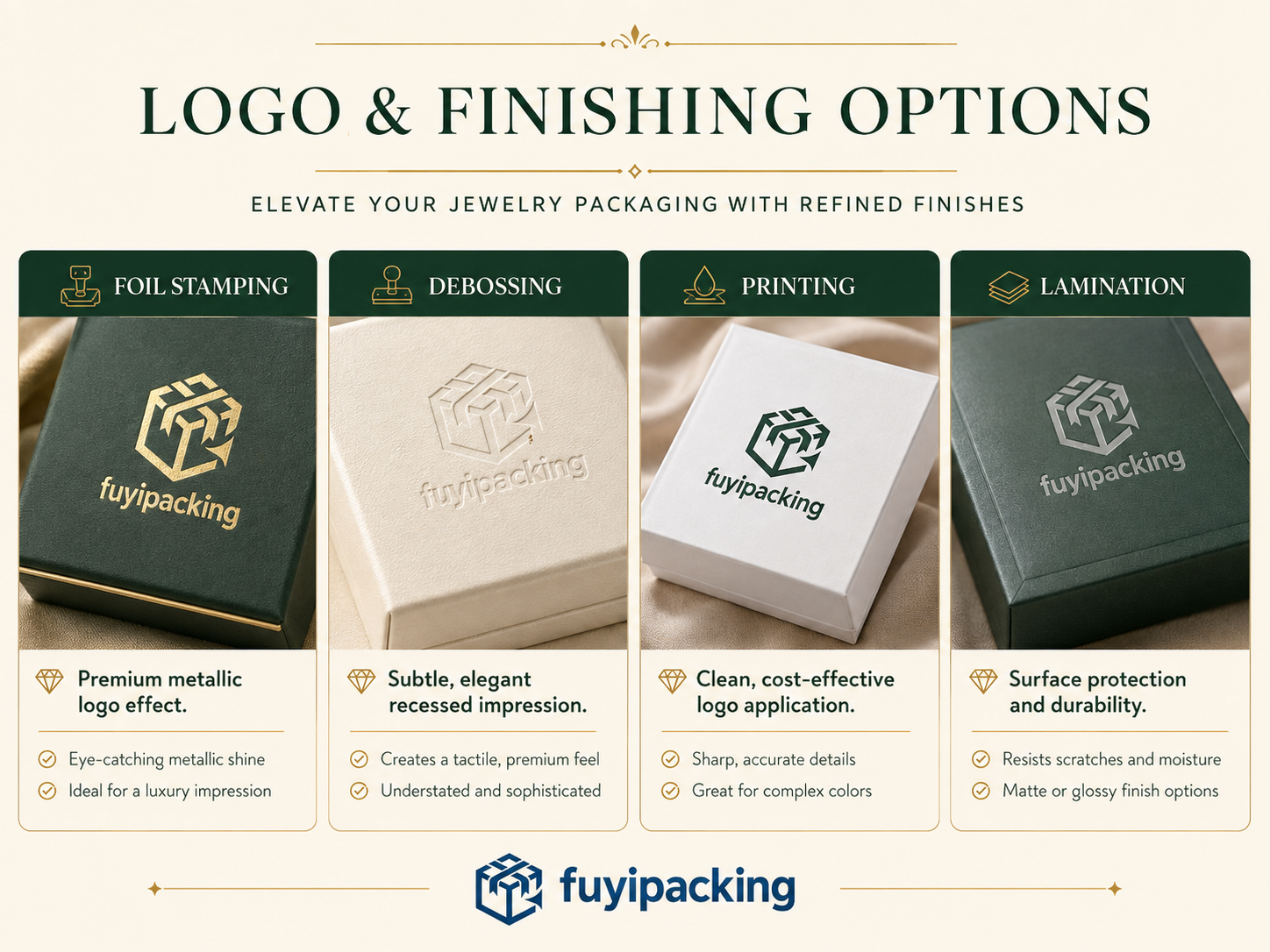
Foil stamping works well on many paper, velvet, microfiber and PU surfaces. Printing is suitable for solid colors and more detailed designs, while embossing or debossing can create a subtle result without relying on metallic foil.
Very fine logo lines may lose clarity on textured materials. Provide vector artwork and confirm the recommended logo size before bulk production.
8. Consider MOQ, Repeat Orders and Shipping
Ready-stock jewelry boxes with logo customization usually allow lower entry quantities than completely customized colors, sizes and structures. Special materials may also have their own minimum purchase requirements.
For packaging that will become part of the brand identity, repeatability is equally important. Record the approved material, color reference, dimensions, insert details and logo specifications for future orders.
Read our Jewelry Packaging MOQ Guide for more information about ready stock, logo customization and full custom production.
A Practical Jewelry Box Material Checklist
Confirm jewelry dimensions, weight and insert requirements.
Define the target retail position and packaging budget.
Shortlist two or three suitable materials.
Review physical color, texture, logo quality and jewelry fit.
Confirm MOQ, sample cost, production time and repeat-order availability.
Frequently Asked Questions
What is the most common material for custom jewelry boxes?
Is velvet or microfiber better for jewelry packaging?
Which material is best for foil stamping?
Should I order a sample before bulk production?
Build the Right Material Plan With FUYI PACKING
Tell us your jewelry type, preferred box style, quantity, budget and logo. Our team can help you compare paperboard, velvet, microfiber, PU leather and other packaging options for your project.